An hour from opportunity: Lt. Gov Candidate Brian Hill’s build out vision
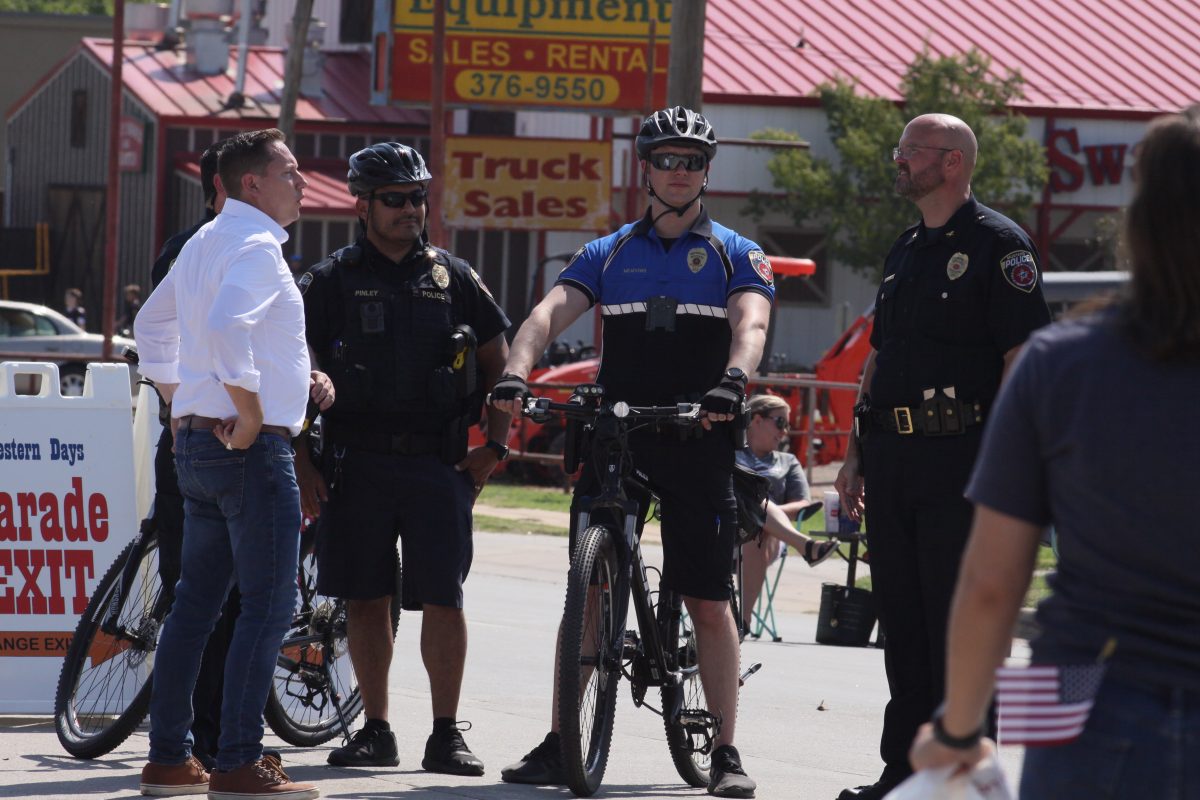
House District 47 Representative Brian Hill speaks to Mustang police officers before the Western Days Parade in Mustang in 2022.
By Jayson Knight
Staff Writer
MUSTANG, Okla. — Ask Brian Hill how to keep young people in Oklahoma and he will not start with a speech. He will start with a map.
Roads, broadband and water are not slogans to Rep. Hill. He wants every kid within an hour of an opportunity hub, and he says the state has the plans to back it up.
“Every kid across this great state being within one hour of an economic opportunity, an economic hub, that changes everything for everyone,” Hill said. “If we invest in roads, bridges, broadband, water lines, all those core things, we position our kids and grandkids to win for generations.”
The roads piece is tangible. The Oklahoma Transportation Commission approved an updated Eight Year Construction Work Plan for federal fiscal years 2025 through 2032 that contains nearly nine billion dollars in highway improvements. The plan lists work on 632 bridges and about 3,800 miles of pavement, including hundreds of miles of two lane highways that currently lack adequate shoulders.
Alongside the big plan is a set of asset preservation projects for 2026 through 2029, 286 projects worth about 509 million dollars, aimed at resurfacing, bridge rehab and accessibility upgrades that extend the life of what we already have. That blend of expansion and maintenance is deliberate.
Hill says the point is predictability. If a town knows a shoulder widening or interchange is funded and scheduled, school boards and business owners make different choices about where to expand.
He brings the same lens to broadband. The Oklahoma Broadband Office’s 2024 annual report describes the state’s path toward universal service using ARPA dollars now and BEAD dollars next, with a process for providers to compete for unserved and underserved locations. Independent coverage notes Oklahoma’s preliminary approval for about 797 million dollars in BEAD funding, with application windows for internet providers this year.
“Broadband is today’s main street,” Hill said. “You cannot ask a family to stay if the kids cannot do homework or a business cannot process an order.”
Then there is water. Hill mentions this like a local because he is one. “I was in a meeting two days ago about water and how we ensure that Tuttle has the supply it needs for the decades ahead,” he said. State planners are updating the Oklahoma Comprehensive Water Plan, with county level projections of public supply demand out to 2075. The Water Resources Board’s latest technical work lays out how much different basins will need and when, so cities can phase lines and storage before growth arrives.
That one hour idea is not a slogan in Hill’s telling. It is a test. If a student in Minco can reach a training center, a hospital, or a manufacturer within an hour, that family sees a path. If a rancher in Blanchard can get reliable internet and a passable shoulder on a route to market, they invest. Infrastructure gets personal fast.
He links the build out to small business policy too. Two bills from this session show the flavor. HB 2390 updates the Self Service Storage Facility Lien Act, clarifying electronic rental agreements, notices and possession rules that shape everyday transactions. And SB 351 addresses credit card surcharges in retail settings, spelling out how and when sellers can impose fees. Hill worked the House side on both, arguing that smoother rules lower friction for main street operators.
He also supported SB 324, creating the Oklahoma Research and Development Rebate Fund at the Department of Commerce to encourage in state R and D. Supporters billed it as a five percent rebate on qualifying in state research expenses, a tool meant to keep new ideas and jobs rooted here. The bill was filed with the Secretary of State in May.
Hill’s pitch is basically this, opportunity has to be within reach and within sight.
“As we invest in ourselves, we position ourselves to win,” he said. “We may be small in size, but Oklahoma consistently punches above our weight.”
You can hear the campaign trail in that line, but it is also how he has governed, with line items, not applause lines.
What to watch next
• ODOT asset preservation 2026 through 2029, 286 projects, about 509 million dollars.
• BEAD rollout, state process to identify unserved locations and award grants to providers, following federal approval.
• Water planning, county level demand forecasts to 2075 guide local storage and line upgrades.
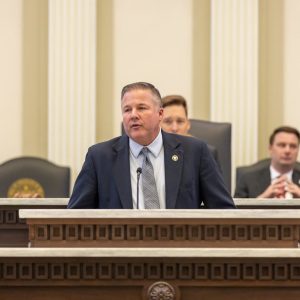
Hill, who represents House District 47, is running for lieutenant governor in Oklahoma’s 2026 election. The general election is Nov. 3, 2026.