Brian Hill holds discussions with Justice Action Network on restorative workforce

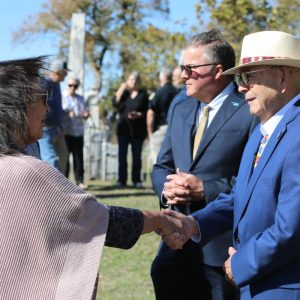
Brian Hill meets with Justice Action Network executive director Lauren Krisai and discussed potential reform opportunities recently. (Photo Provided)
By Jacob Sturm
[email protected]
Brian Hill, Representative for House District 47 in Oklahoma, recently spent some time chatting
with multiple groups on subjects he has spent time working on during his time representing the
community at the Capitol.
One of those groups was the Justice Action Network, where Hill spoke with representatives
from the group regarding restorative workforce. The topic will help ensure people come out of
incarceration with the documents they need to be able to get a place to live, and a job
immediately.
Hill said people who leave incarceration with those documents in place are 90% less likely to
recidivize, steal and harm the communities in the state.
He mentioned Justice Action Network has been involved from fairly early in the process,
including when the state-wide announcement encouraging companies to work with the
Department of Corrections to be able to do interviews of individuals knowing what their
certifications would be coming out of the skill centers.
“Justice Action Network has continued to stay involved in meeting with us, hearing about what I
have been working on, and then also they have been a champion on behalf of Oklahoma on
sharing the great work that we’ve done, where we are leading in this sector now and other
states are actually following our lead,” Hill said.
Hill also indicated Oklahoma was the largest incarcerator in the world back when he took office
in 2018. He mentioned currently Oklahoma sits as the lowest recidivism rate in the country.
He cited the passing of the Sarah Stitt Act, which made those documents available as people
leave incarceration. The work has also been seen in five other states, with them passing the
same legislation in their states since Oklahoma did.
“This is a strong opportunity for us to save taxpayer dollars,” Hill said. “It costs you and I
$20,000-$30,000 per year to incarcerate individuals. And if those that are coming back into the
private sector, which is 90-plus% of the prison population, when they come back in we need
them to get a job, we need them to become beneficial members of society, contributing
members of society. And by that happening, that’s a win for all Oklahomans.”
Hill is now focused on legislation with parts of the Sarah Stitt Act that will help youth in
Oklahoma Juvenile Authority to also have those same documents.
“These young people have the highest propensity for ending up incarcerated as adults,” Hill
said. “And we want to help them get on the right path so that they don’t follow that path as
adults.”
The OJA part of his work came through a facility tour in Mustang where he talked with some of
the youth, and said he wanted to make sure they are positioned to succeed when they come
out of OJA.