Grant helps add defibrillators to sports complexes

Midwest City has added Save Station Automated External Defibrillators to sports complexes. Photo by Jeff Harrison
By Jeff Harrison
Midwest City Beacon
Medical emergencies can happen anywhere and anytime.
The Midwest City Fire Department is helping people stay prepared by adding automated external defibrillators (AEDs) at local sports complexes.
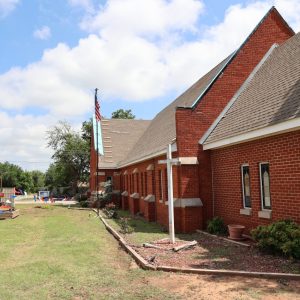
The Save Station AEDs were installed at the Reed Ballpark, Midwest City Multi-Athletic Complex, and Midwest City Soccer Complex at Regional Park.
Fire Chief Bert Norton said the AEDs are user friendly and can provide lifesaving early defibrillation. First responders aim to be on the scene within five minutes. The AEDs allow early treatment before help arrives.
“In that five-minute window, the AED will already be deployed and put on the patient and CPR will be put in progress,” Norton said.
An AED is used to help those experiencing sudden cardiac arrest. The medical device can analyze the heart’s rhythm and, if necessary, deliver an electrical shock, or defibrillation, to help the heart reestablish an effective rhythm.
The AEDs are kept in a mounted cabinet that is highly visible and ADA accessible. When the cabinet is opened, an alarm sounds and it automatically contacts 911 dispatchers. It then sends another notification when the AED is deployed, allowing dispatchers to send emergency personnel. It also takes a photo of the person who opened the Save Station.
“Before someone can make a phone call, our dispatch is being notified that the AED has been deployed and they’re able to send a firetruck,” he said.
Norton said the Save Station AEDs are user friendly.
“The AED can talk them through it and where to apply the pads and what do,” he said.
The new lifesaving equipment was purchased with a grant from the Midwest City Memorial Hospital Authority Community Improvement Grant Program. The fire department was awarded $21,855 to purchase the AEDs from Save Station, a Canadian company.
The grant program funds projects for nonprofit organizations and governmental agencies that improve the quality of life and address diverse issues and opportunities facing the community. Grants cannot be used for regular budget items for city departments.
“Anything that we do with the grants needs to be justified,” Norton said. “We looked around for projects that could add value to the community. Hopefully we never have to use this, but if we do, it’s ready to go.”
The risk for cardiac events among children and youth was one of the driving forces behind the request. Norton pointed to Buffalo Bills safety Damar Hamlin who received lifesaving defibrillation and CPR during an NFL football game. Midwest City native and Bills athletic trainer Denny Kellington delivered lifesaving treatment to Hamlin on the field. He has advocated for Oklahoma legislation requiring schools to have a cardiac emergency response plan.
“Early defibrillation can save a life, much like it did with [Damar Hamlin],” he said.
Norton is a parent of a child in travel softball and understands concerns. Many schools are making AEDs more accessible by placing them on the gym floor and sidelines at football games. Norton said he hopes youth sports complexes follow suit.
“When we went to one ballfield, I saw an AED in the concession stand it was inside a cage with a padlock on it,” he said. “I asked them how we can activate that, and no one knew where the key was.”
Norton said the AEDs at the Midwest City sports complexes are both visible and user friendly. The new and renovated facilities regularly draw large crowds for youth and adult leagues and tournaments.
“Midwest City committed money in the GO bond election to enhance the fields and that’s drawn in a lot of people to a concentrated area,” Norton said.
The new AEDs were installed a couple of weeks ago. They were tested and activated last week.
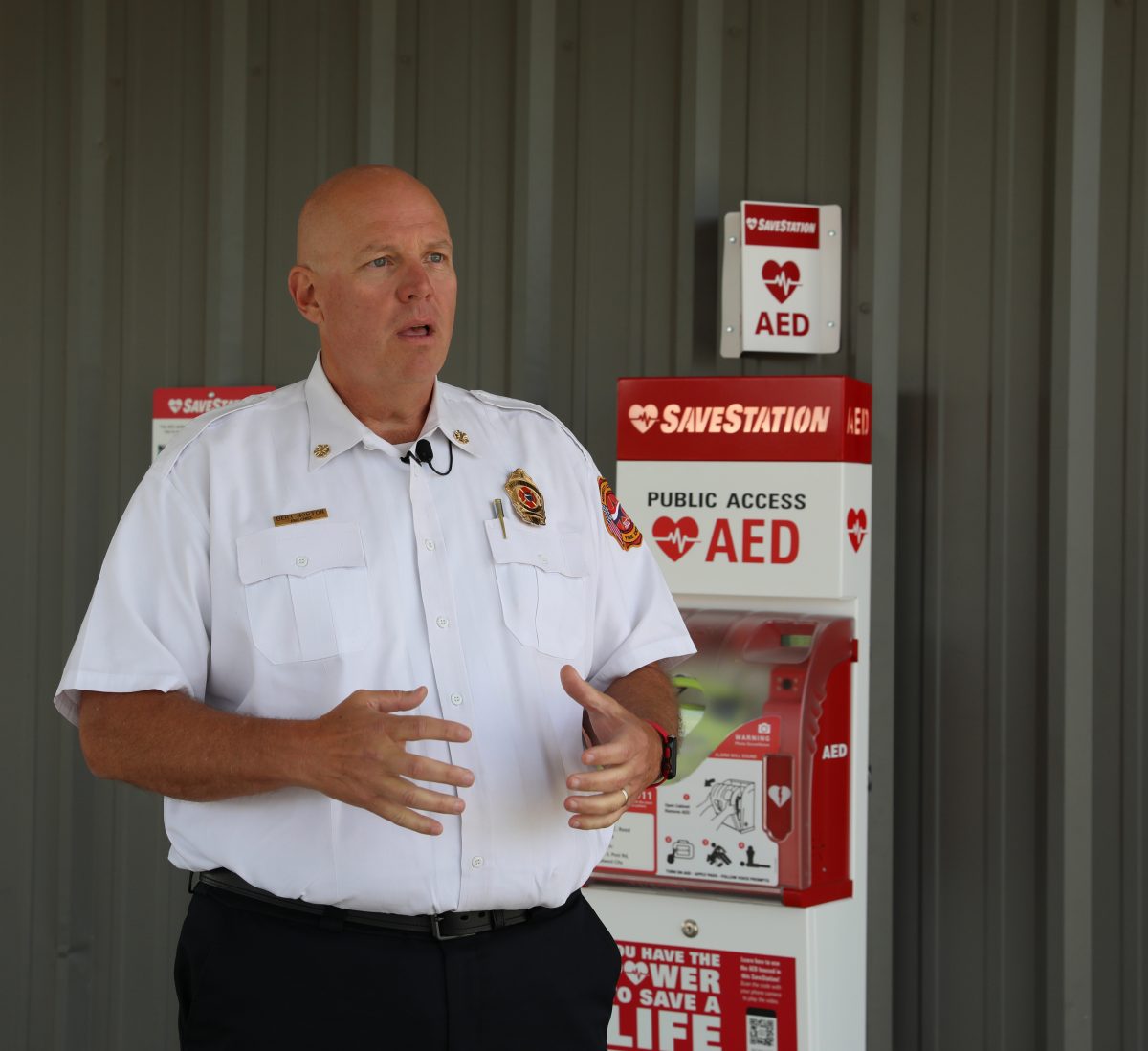
Midwest City Fire Chief Bert Norton speaks about the importance of new Save Station Automated External Defibrillators that were added to sports complexes in Midwest City. photo by Jeff Harrison