Firefighters, paramedics, dispatchers team up for training

A Midwest City firefighters and SSM Health paramedics practice treating a smoke inhalation victim. Photo by Jeff Harrison
By Jeff Harrison
Midwest City Beacon
Midwest City firefighters teamed up with EMS crews last week for a unique live fire training exercise designed to improve response to smoke inhalation victims.
The training exercise gave firefighters and paramedics hands-on practice rescuing and treating simulated patients. The department regularly conducts four live burns a year at the police/fire training center, but this is the first time they’ve incorporated EMS.
Fire Chief Doug Beabout said the Cyano Kit can provide lifesaving treatment for people exposed to smoke in a fire.
“One of the things that smoke inhalation patients need, or potentially need, is a Cyano Kit,” said Beabout. “There are two poisonous gasses in the smoke of a fire—carbon monoxide and hydrogen cyanide. We can flush out carbon monoxide with oxygen, but hydrogen cyanide has to be chemically removed. That’s what the Cyano Kit does, and it’s truly a life-saving medication for fire victims.”
Beabout said the department has been working closely with SSM Health St. Anthony Emergency Medical Service and emergency dispatchers to improve coordination.
“We’ve got everybody out here—firefighters, EMS crews, dispatchers—all working together,” Beabout said. “When a victim comes out of the structure, EMS is right there to continue care. It’s about giving our citizens the best chance of survival.”
The training scenario featured a one-story structure fire with a victim trapped inside. Crews were timed from the moment the first truck arrived until the victim was pulled out. Beabout said the goal is to remove victims within four minutes, which gives them a greater than 70% chance of survival.
“One of the things we’ve been tracking is the firefighter rescue survey, and our crews are averaging pretty close to two minutes from the time the first truck stops to when the victim is discovered and removed,” Beabout said. “That commitment to speed and efficiency is huge.”
Richardson said quarterly live burns are not only valuable training but also an important recruiting tool.
“You won’t find many departments where the entire crew gets hands-on live fire training four times a year,” he said. “It’s not watching videos or reading a book—it’s about real-world experience.”
Beabout said the partnership with EMS has exceeded his expectations.
“This is a commitment we’ve made,” he said. “We’re going to train regularly on rescuing victims and integrate with our EMS partners to give people the best possible chance of survival.”
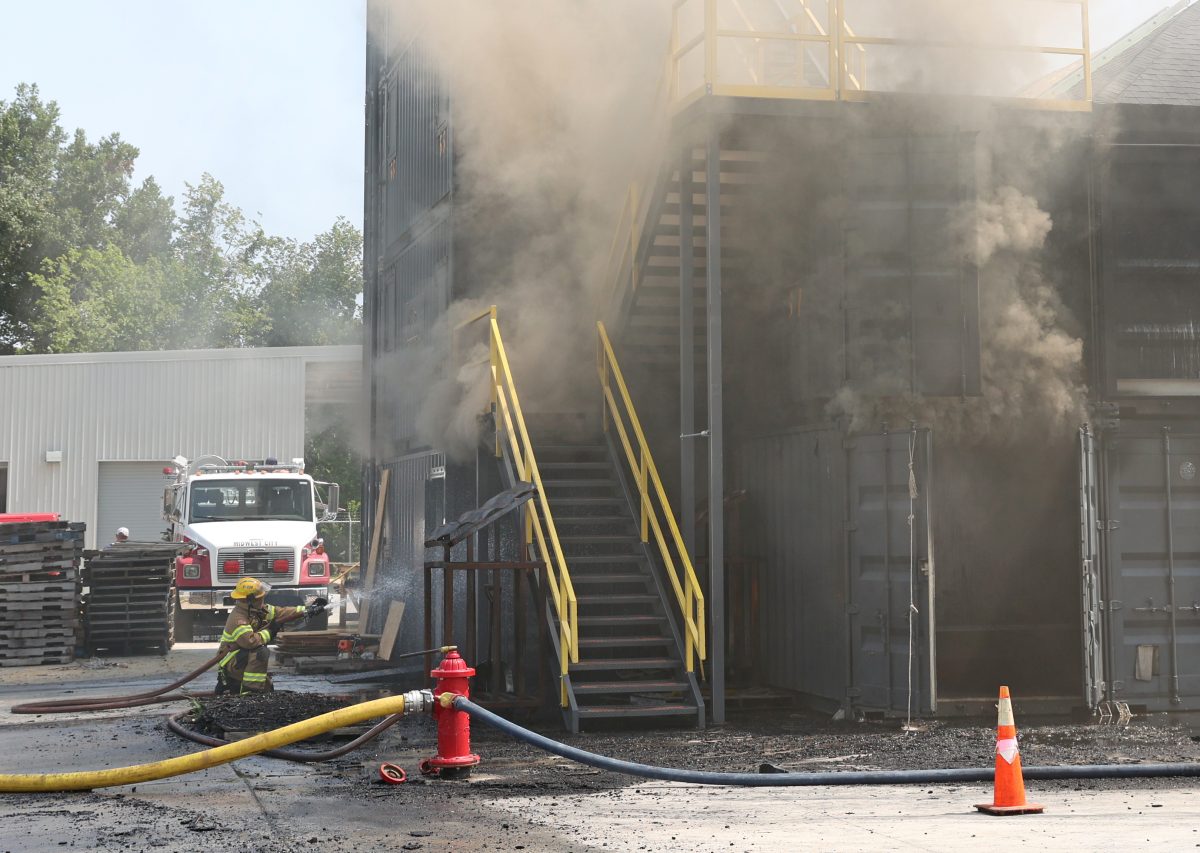
Midwest City firefighters conduct a live burn exercise at the Police/Fire Training Center. Photo by Jeff Harrison
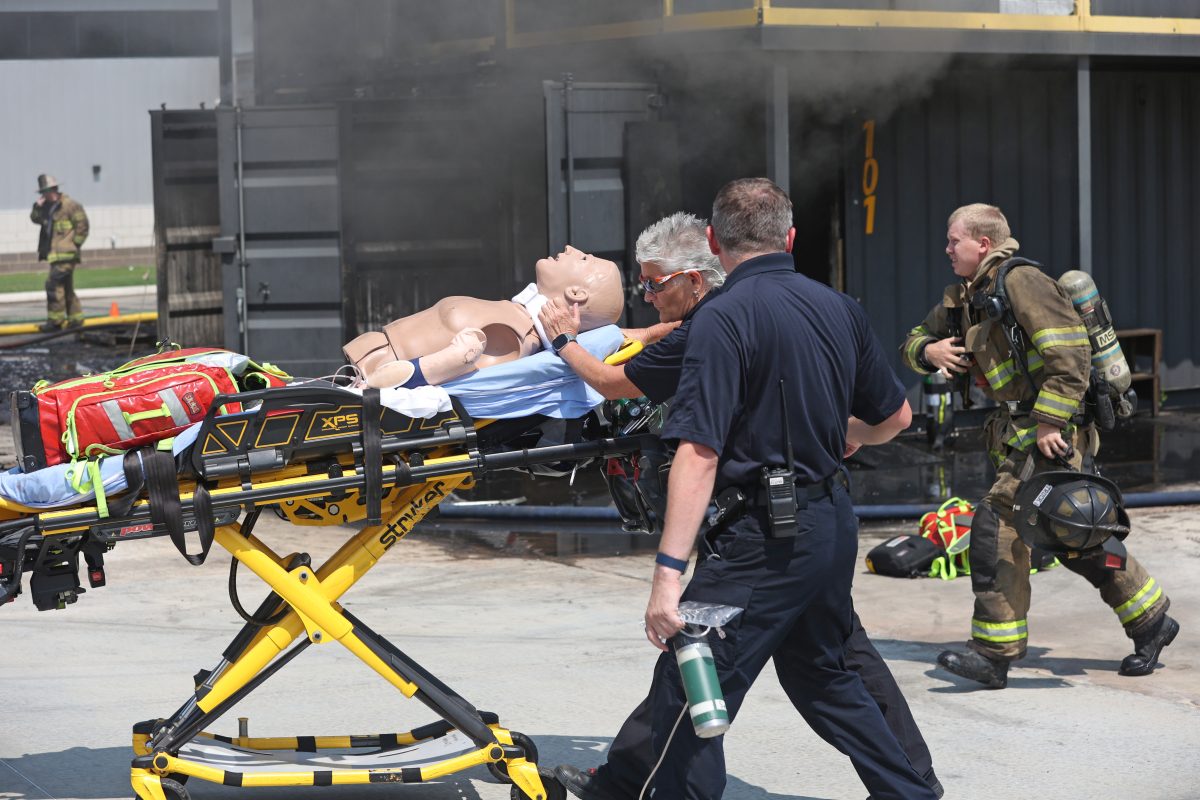
Paramedics and firefighters participate in a live fire training exercise. Photo by Jeff Harrison