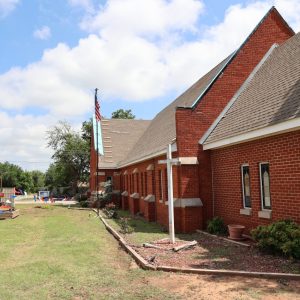
Paxton, Anoatubby honor Silver City Cemetery restoration
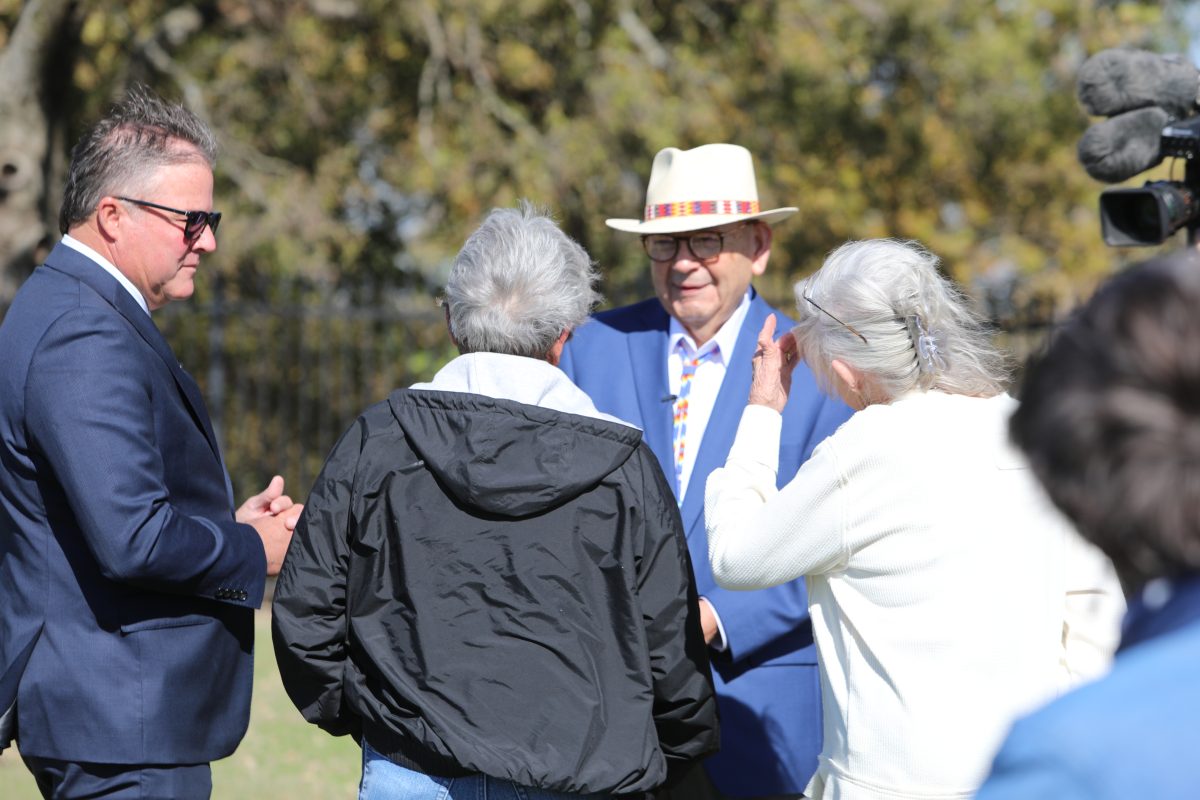
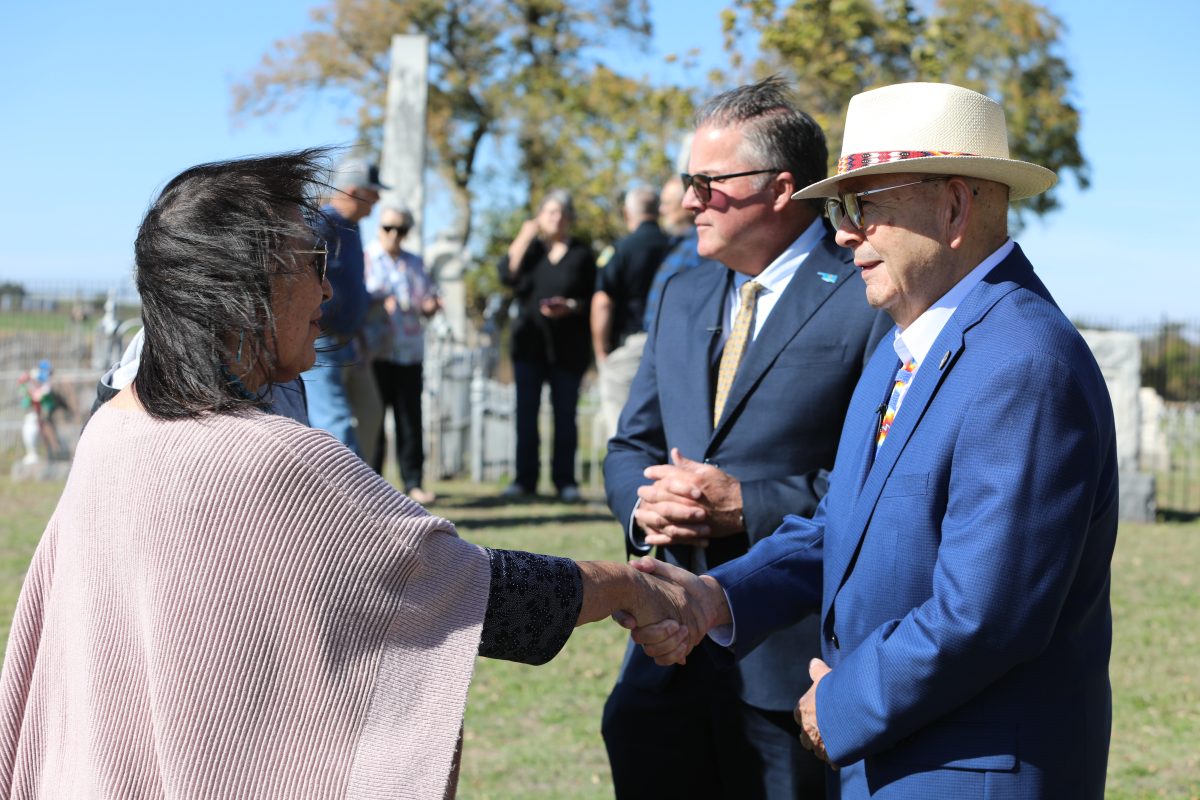
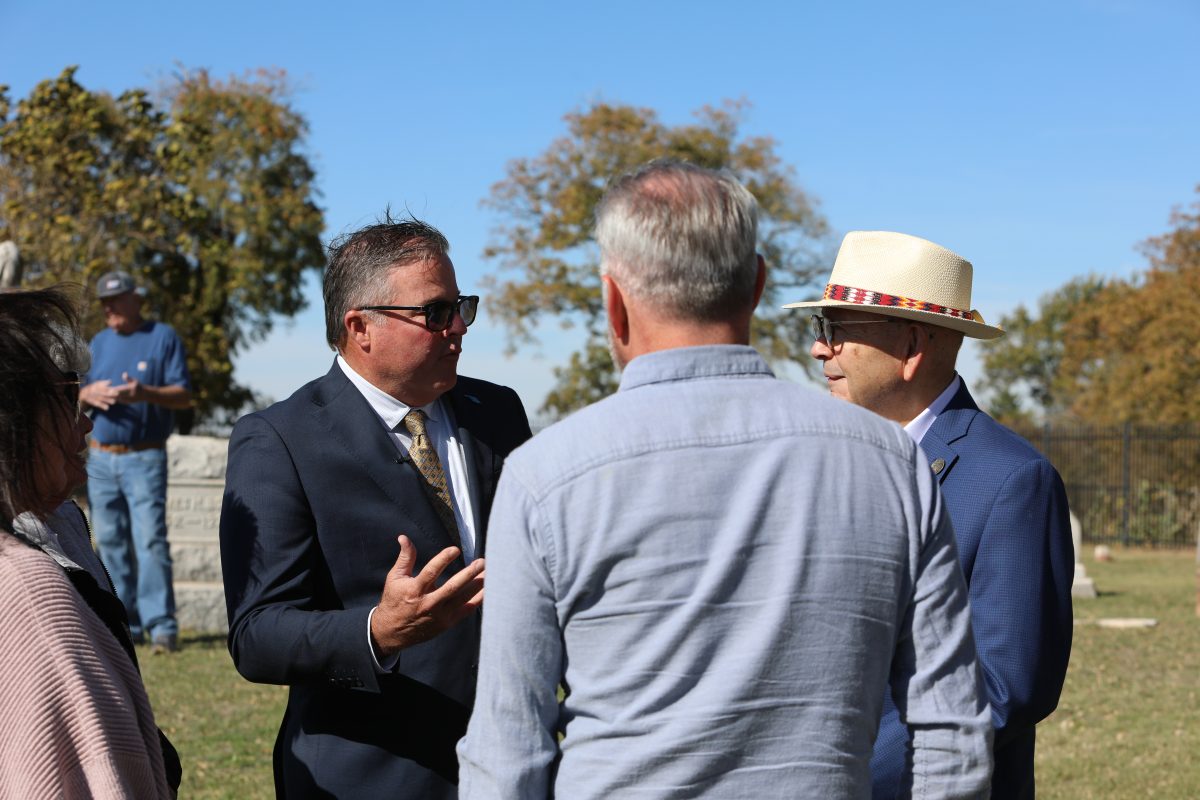
Senate Pro Tem Lonnie Paxton and Governor Bill Anoatubby stand together at Silver City Cemetery in Tuttle. The two leaders met to recognize the restoration of one of Oklahoma’s few surviving Chickasaw-era burial grounds.
By Jayson Knight
A sharp northwest wind pushed through the prairie grass near Silver City Cemetery in the late morning Tuesday, November 4 as Oklahoma Senate President Pro Tem Lonnie Paxton raised his voice over the gusts.
“The cemetery and the kind of people involved in it,” Paxton said, gesturing toward the rows of headstones. “That’s what today’s about. We wanted to give people the opportunity to come out here, see this, and recognize all of you who’ve helped preserve this place and make it what it is. Thank you all so much for what you’ve done.”
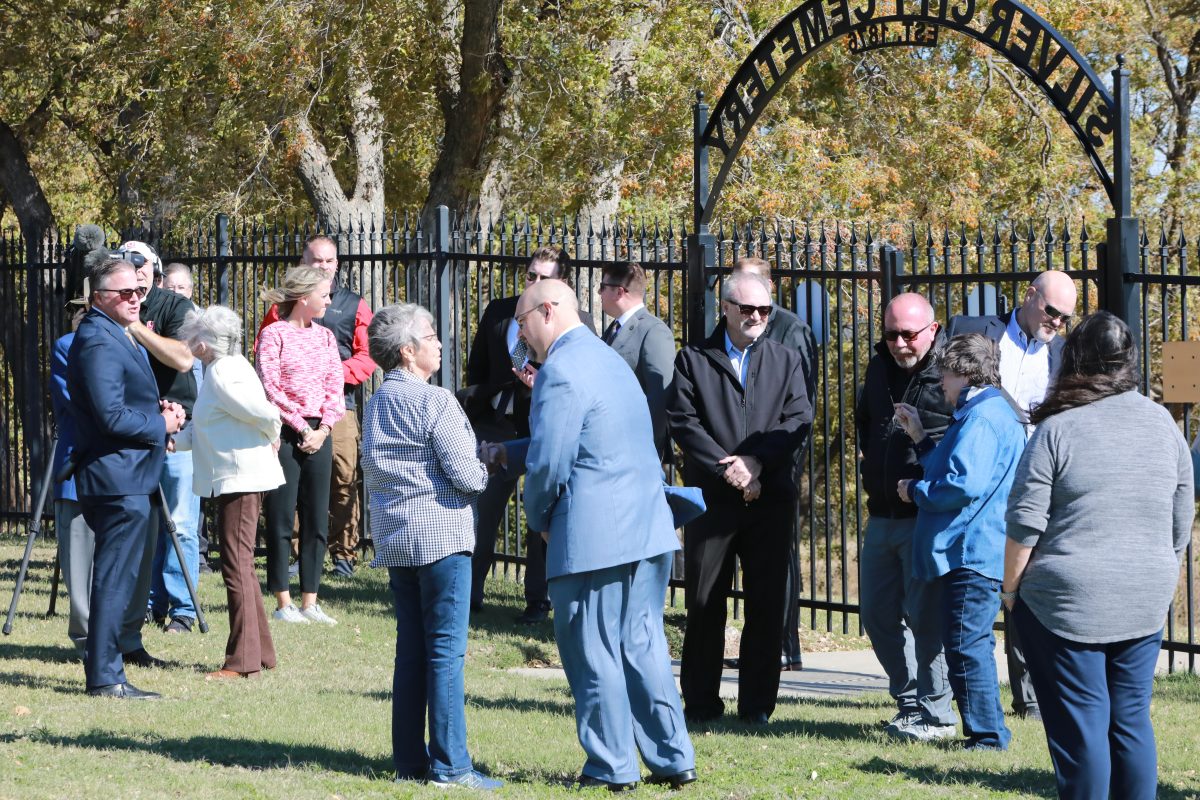
Along with a group of a couple dozen or so, Governor Bill Anoatubby of the Chickasaw Nation joined Paxton.
“Well, I just want to thank you,” Governor Anoatubby began. “I’m glad to be here. We came down a little after lunch, and I got excited about it. I honestly didn’t realize it had been restored. I want to take this opportunity to recognize anyone who had anything to do with it, because this is important. These people, the ones buried here, are a vital part of the history of the Chickasaw Nation. And beyond that, the history of Oklahoma itself.”
He looked across the cemetery at the names of the families who took a risk by settling in Silver City before Minco, Mustang, or Tuttle existed, before there was an Oklahoma. Silver City once stood within what is now Tuttle’s city limits, though the original Tuttle formed a few miles to the south before growing to encompass the old settlement.
Before all that, in 1878, it was the Pickens District of the Chickasaw Nation in Indian Territory, and it was a hard life. Every day was nearly death-defying with far less protection from weather, outlaws or wild animals.
That’s when Montford T. Johnson moved his ranching operation to the north side of the South Canadian River. His ranching enterprise was already among the largest in Indian Territory, and it kept growing from there. One of the main reasons was his partnership with Jesse Chisholm, namesake of the local, historical Chisholm Trail.
Johnson was a half-Chickasaw orphaned at six who became an expert cattle-herder as a child, and a frontier businessman by his late teens. He started the ranch that would become the heart of Silver City.
Chisholm was a half-Cherokee who grew up trading among Indian tribes and U.S. soldiers. He became a trail guide and peace broker from as far north as Wichita, Kansas down to the Red River. He’s buried today near Geary with a headstone that reads: “Trail Blazer, Guide, Interpreter and Friend of the Indian.”
Men like Johnson and Chisholm couldn’t depend on law or rescue. Their safety came from their judgment, tireless work ethic, and the respect they earned with their blood, sweat, and word.
Before investments were about diversification, equity and capital, they were about trustworthiness, toughness, and intuition.
Johnson and Chisholm had plenty, and so did the people who would go on to form Silver City.
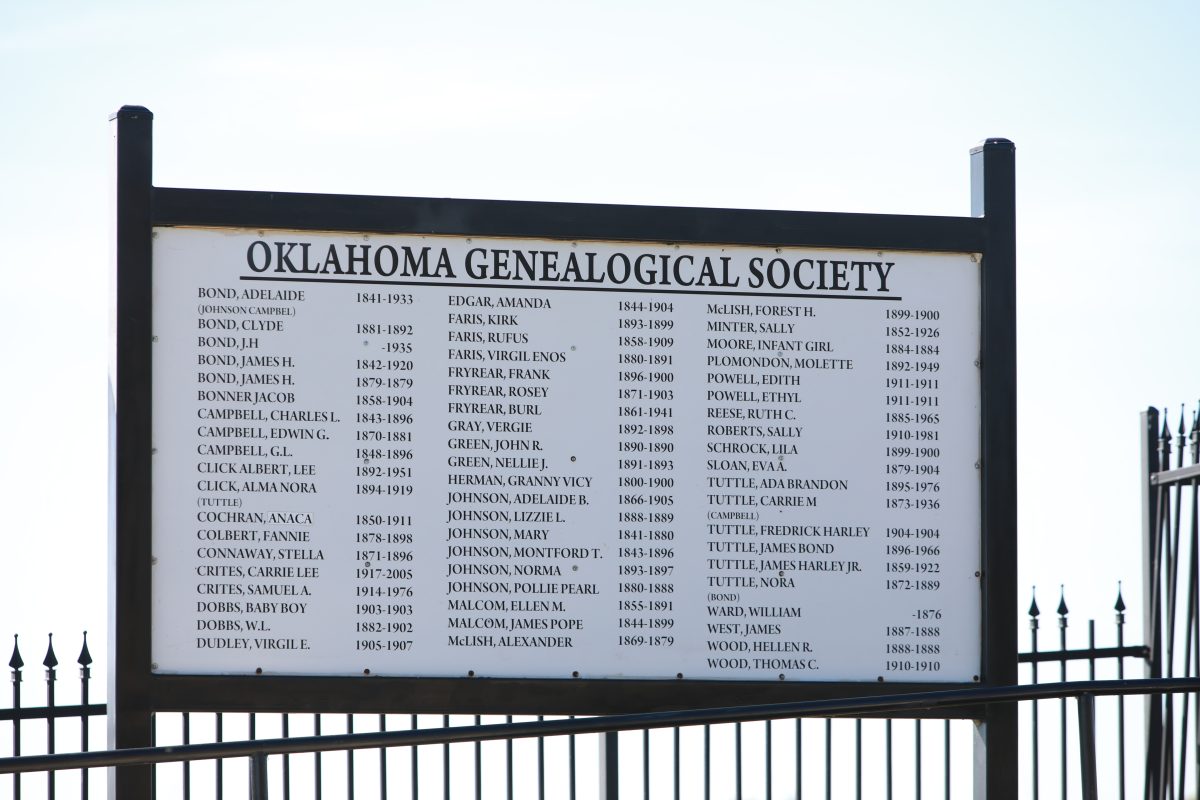
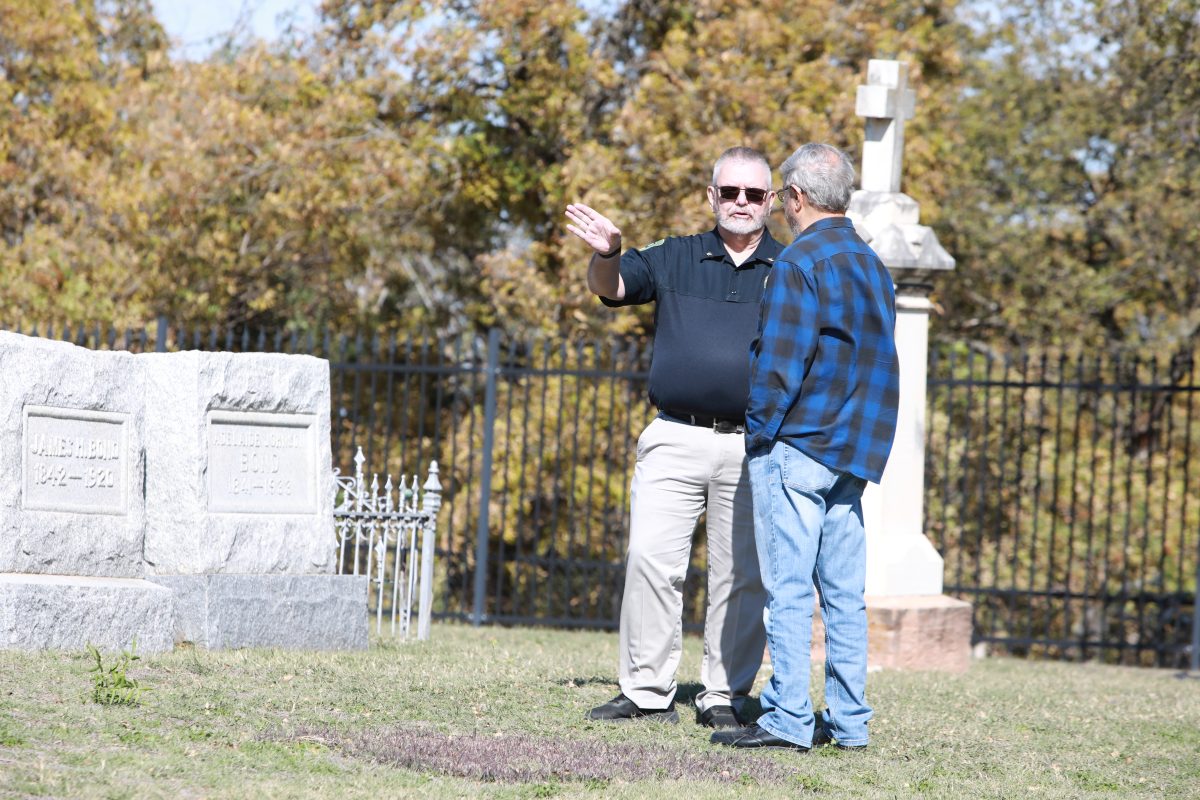
Among the 30 family names featured at this semi-secret Indian burial ground located in Tuttle, some of the more common ones include Johnson, Bond, Campbell, Tuttle, Fryrear and Faris.
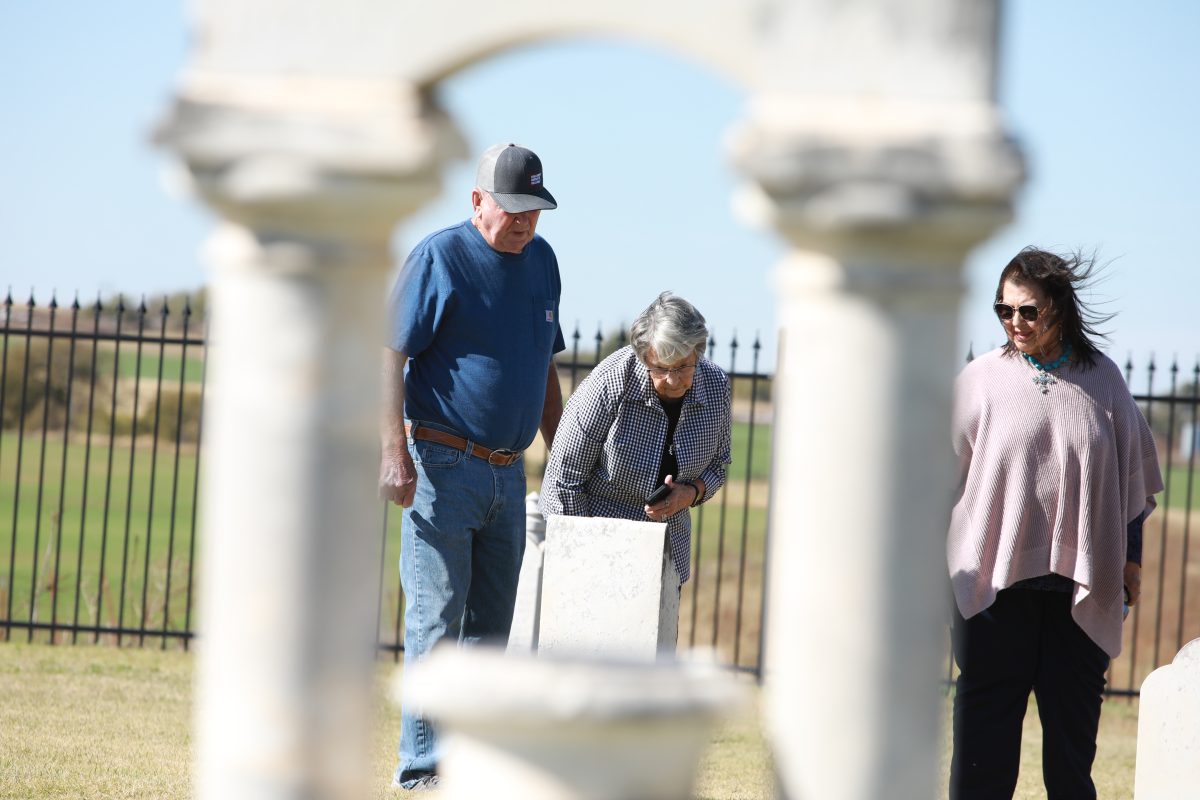
“Every headstone has a story behind it,” Anoatubby said Tuesday, November 4. “Every name represents part of the history of this community. And that means a lot. Everyone who calls this area home carries a little piece of that history with them. There’s something powerful about seeing it preserved.”
Inside a glass case, a framed National Register of Historic Places certificate confirmed what the governor was describing. The cemetery is one of Oklahoma’s few remaining direct links to the Chickasaw ranching era and the great Montford T. Johnson who gave life to this region.
Within a couple years of moving his ranch to this area, Johnson opened a store, leased land, employed Native and non-Native ranch hands, and built corrals and fences that marked the first true infrastructure of the area.
Silver City, as the settlement became known, was less a “city” and more a growing community built around Johnson’s industry. By the 1880s, there were families, a post office, and a small cemetery. What remains of that town now lies under quiet pasture, the cemetery its last surviving feature.
As the 1880s closed, change came on iron wheels and tracks. The Chicago, Rock Island & Pacific Railroad, known collectively as Rock Island, was extending through Indian Territory, linking Oklahoma City to Chickasha and beyond. The line bypassed Silver City, and that single decision redirected the region’s future.
When the first trains began running in 1890, residents of Silver City packed their belongings and moved closer to the new depot. The town they formed there was called Minco, derived from the Choctaw word for “chief.”
The Rock Island line carried cattle, grain, and passengers, turning Minco into a hub of commerce almost overnight. Johnson’s ranching network provided the livestock, and the rail provided the markets. Though he didn’t live to see its full growth, the new town was an indirect product of his enterprise.
Today, Minco still wears its heritage proudly—the “Land of Milk and Honey,” known for its farms, dairies, and annual Honey Festival. The original tracks remain active, now carrying freight, following the same corridor that first pulled settlers away from Silver City.
If Minco owed its start to the Rock Island line, Tuttle owed its existence to another.
Around 1901, a new rail extension, known affectionately as “Frisco,” cut through eastern Grady County. That route gave rise to Tuttle, named for rancher James H. Tuttle, who had purchased land from the Colbert family, the Chickasaw family that raised Johnson.
Tuttle grew where the Frisco line met the old ranchlands, serving as a shipping point for cattle, cotton, and wheat. The depot became the heart of the community, with storefronts, a blacksmith, and even a hotel springing up nearby.
By the time Tuttle was incorporated in 1906, Montford Johnson had been gone a decade. Yet his influence lingered. His ranch once covered much of the land where Tuttle would rise, and many of its earliest families had ties to his workers or trading partners. In every way but paperwork, he was the region’s original developer.
The cemetery that brought Paxton and Anoatubby together last Wednesday’s windy afternoon stands as the physical link between all three towns. Buried there are members of the Johnson family and others who helped transform Chickasaw grazing land into the communities that followed.
During his remarks, Paxton reflected on how quickly places like Silver City could fade without stewardship.
“You can see how fast something like this can fall into disrepair if nobody’s watching over it,” he said. “Back in the 1970s, this cemetery had already started to fall apart. A few local families took it upon themselves to keep it up, and then about fifteen years ago, a group came together again and said, ‘We need to preserve this history.’ They raised the funds, rebuilt the fences, restored the grounds, everything you see here today.”
Anoatubby nodded as Paxton spoke.
“Tribal relations are incredibly important,” he added later. “Oklahoma is home to many sovereign nations, and that’s something unique, something to be proud of. We need to focus on the strength that brings us together, not just the differences. At the end of the day, we’re stronger as a state when we all work together.”